
Managing Subluxations and Dislocations
For many people with Ehlers-Danlos syndrome (EDS), joints slipping, shifting, or coming out of place are part of daily life. These events can be painful, exhausting, and frightening—especially when they happen during ordinary activities rather than accidents. Understanding what’s happening and how to respond can make them easier to manage and less disruptive over time.
Subluxation vs. Dislocation: What’s the Difference?
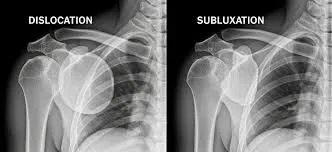
A subluxation is a partial loss of joint alignment. The joint surfaces shift out of their ideal position but still maintain some contact.
These often feel like slipping, catching, popping, or giving way
They may reduce on their own or with gentle repositioning
They are extremely common in EDS and often happen during everyday movement
A dislocation is a complete loss of joint contact, where the joint surfaces are no longer touching.
These are usually more painful and alarming
They often require medical assistance to reduce
They occur less frequently than subluxations but carry higher risk
Repeated subluxations—especially when they happen quietly and often—can still cause significant pain, muscle guarding, and nervous system irritation over time, even if imaging later appears “normal” [Castori 2017; Parry 2024].
Why Subluxations Happen So Easily in Daily Life
In EDS, joints rely less on passive tissue support and more on muscle control. When muscles fatigue, coordination slips, or awareness drops—even briefly—joints can drift out of alignment during normal tasks like rolling in bed, reaching overhead, standing up, or carrying light objects [Engelbert 2017].
What Subluxations Can Feel Like
Not all instability looks dramatic. Subluxations may feel like:
A joint suddenly “giving way”
A sharp or catching pain with movement
A sense that something is out of place
Sudden weakness or loss of control
Pain or soreness that lingers afterward
These experiences are real and common in EDS, even when others can’t see them.
What to Do at Home When a Joint Slips
During or right after a subluxation:
Stop the movement and reduce load on the joint
Use slow, gentle repositioning—never force
Support the joint with pillows, compression, or bracing if helpful
Apply heat to calm muscle guarding or ice if swelling is present
Use breathing to reduce panic and muscle tension
Aggressive stretching, yanking, or “popping it back” can increase tissue irritation and prolong symptoms [Parry 2024].
Afterward:
Expect increased soreness or fatigue for a day or two
Reduce activity temporarily rather than pushing through
Resume movement gradually, focusing on control rather than range
How Physical Therapy Helps Reduce Subluxations and Dislocations
Physical therapy for EDS is not about preventing all joint movement—it’s about improving control, awareness, and timing so joints stay centered during daily life.
Effective PT focuses on:
Improving joint position sense (proprioception)
Training muscles to activate earlier and more evenly
Reducing over-gripping and protective bracing
Teaching safe movement strategies for daily tasks
Building tolerance slowly to avoid flare–crash cycles
Rather than aggressive strengthening or stretching, PT emphasizes low-load, precise, repeatable movement that the nervous system can trust [Celletti 2015; Engelbert 2017].
Over time, this approach can:
Reduce frequency of subluxations
Shorten recovery time after slips
Decrease fear around movement
Improve confidence with daily activities
When to Seek Medical Care
Seek urgent care if:
A joint cannot be gently repositioned
There is severe pain, numbness, or loss of circulation
The joint looks visibly deformed
Symptoms worsen instead of settling over time
Patient Summary: How I Can Manage Joint Slips
“In EDS, joints can partially or fully slip out of place during everyday activities—not because I’m careless, but because my body relies more on muscle control than passive support. A subluxation is a partial slip, while a dislocation is a full one, and both can be painful and disruptive.
When a joint slips, gentle support, calming the nervous system, and avoiding force matter more than “fixing it fast.” Physical therapy helps me learn how to keep my joints better centered, recover more easily when slips happen, and move with more confidence in daily life. I may not be able to prevent every subluxation—but with the right tools, they don’t have to control my life.”